-
Magic: the Gathering
Last Expansions Star Trek Reality Fracture The Hobbit Marvel Super Heroes Secrets of Strixhaven Teenage Mutant Ninja Turtles Lorwyn Eclipsed Avatar: The Last Airbender Marvel's Spider-Man Edge of Eternities View all expansions...Categories Singles Tokens/Emblems Oversized Booster Boxes Boosters Bundles and Fat Packs Tournament Prerelease Packs Tins Complete Sets Preconstructed Decks View all categories...Star Trek Collector Booster Box
starting from $566.08 View all offers -
Yu-Gi-Oh!
Last Expansions Magnificent Maestros Beyond the Brave Magnificent Monsters Chaos Origins Battles of Legend: Glorious Gallery Blazing Dominion Legendary Modern Decks 2026 Rarity Collection 5 Maze of Muertos Burst Protocol View all expansions...Categories Singles Oversized Booster Boxes Boosters Bundles Preconstructed Decks Starter Decks Tins Special & Deluxe Editions Dice View all categories...Beyond The Brave Booster Box
starting from $82.30 View all offers -
Flesh and Blood
Last Expansions Usurp the Shadow Throne Mastery Pack: Warrior Omens of the Third Age Compendium of Rathe Super Slam Smash Palace High Seas The Hunted Rosetta Part the Mistveil View all expansions...Categories Singles Booster Boxes Boosters Preconstructed Decks Art Card Token Complete Sets Decks Displays Dice Playmats Box Set View all categories...Usurp the Shadow Throne Booster Box
starting from $136.41 View all offers -
Digimon
Last Expansions EX-13: Chivalrous XIII BT-26: Timeless Bonds EX-12: Digital World Shambala BT-25: Dual Revolution EX-11: Extra Booster Dawn of Liberator BT-24: Time Stranger BT-23: Hackers' Slumber EX-10: Extra Booster Sinister Order BT-22: Cyber Eden EX-9: Versus Monsters View all expansions...Categories Singles Memory Gauge/Tokens Booster Boxes Boosters Bundles and Pack Sets Starter Decks Playmats Albums Sleeves Deck Boxes View all categories...BT-26: Timeless Bonds Booster Box
starting from $108.91 View all offers -
One Piece
Last Expansions OP-18: The Dominance of God EB-05: Heroines Edition Vol.2 OP-17: The World's Strongest Warriors OP-16: The Time of Battle OP-15: Adventure on Kami's Island EB-03: Heroines Edition EB-04: Egghead Crisis OP-14: The Azure Sea's Seven OP-13: Carrying on his Will PRB-02: The Best 2 - Premium Booster View all expansions...Categories Singles DON!! Booster Boxes Oversized Boosters Playmats Bundles & Sets Tins Starter Decks Memorabilia and Gadgets View all categories...OP-18 Booster Box Case
starting from $4,432.50 View all offers -
Dragon Ball Super
Last Expansions Fusion World: Reach The God Fusion World: Brightness of Hope Fusion World: Story Booster 01 Impact Beyond Dimensions Fusion World: Cross Force Three Glorious Fighters Fusion World: Dual Evolution Fearsome Rivals Fusion World: Saiyan's Pride Fusion World: Manga Booster 02 View all expansions...Categories Singles Storage Boosters Sleeves Dice Albums Complete Sets Booster Boxes Starter Decks Deck Boxes View all categories...Fusion World: Reach the God Booster Box
starting from $209.42 View all offers


Magic Scholarship Series - Magic: the Gathering
Product search
Applied filters2
Expansion
rarity
Magic Scholarship Series - Magic: the Gathering
The Magic Scholarship Series represents a unique chapter in the history of competitive play for Magic: the Gathering. Originally established as the Junior Super Series (JSS) before being rebranded, these tournaments were specifically designed for younger players, offering rewards that included academic scholarships and exclusive promotional cards. For collectors and enthusiasts, these cards are highly sought after due to their limited print runs and distinctive foil treatments that set them apart from standard expansion releases.
History and significance of the series
Launched in the late 1990s, the program provided a vital gateway for the next generation of competitive players to enter the professional circuit. The cards distributed through these events often featured the Junior Super Series or Magic Scholarship Series expansion symbol, distinguishing them from standard core set or expansion printings. These promos were typically given to participants and top finishers, meaning they never entered the traditional retail market through booster packs. As a result, finding these cards today often requires browsing specialized marketplaces like CardTrader, where sellers from around the world list their rare inventory for collectors aiming to complete historical sets.
Rare foils and collectibility
The most iconic aspect of the Magic Scholarship Series is the selection of Singles made available during the life of the program. Cards like Elvish Champion and Glorious Anthem became staples of the series, often featuring alternate artwork or premium foiling. Collectors value these versions because they represent a specific era of promotional design and a legacy of youth competitive play. Unlike modern promotional products, these were physically handed out at regional tournament locations, adding a layer of historical prestige to every copy. The foiling process used during this period is also distinct, often appreciated for its vibrancy and quality compared to standard foils of the time.
Guide to choosing Magic Scholarship Series cards
When looking to add these pieces to your Magic: the Gathering collection, there are several factors to consider to ensure you find the right item for your needs.
Condition is paramount for promotional cards of this age. Since many of these were handled by younger players at tournaments before being sleeved, finding Near Mint copies can be a challenge but is highly rewarding for long-term value preservation. Always check seller descriptions for specific details on card state.
Verify the expansion symbol and the year of release. Some cards were printed across multiple years of the program with slight variations, so identifying the specific version you need for a completionist set is essential. You can filter through various expansions to find the exact printing that matches your criteria.
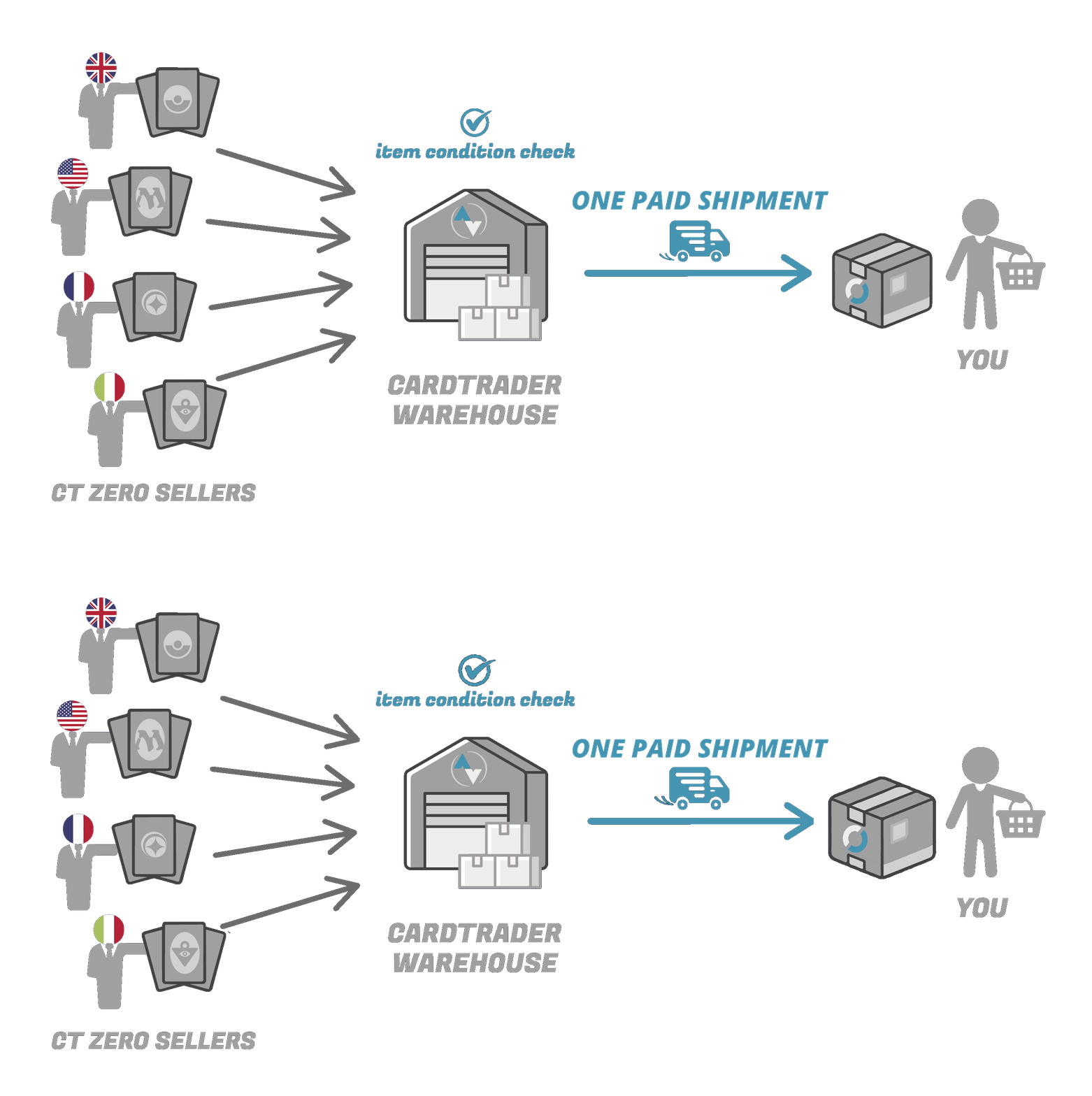
Utilize CardTrader Zero to consolidate your purchases. Since these cards are rare and specialized, you might find different pieces from sellers located in different countries. This service allows you to combine multiple orders into a single shipment, saving significantly on international shipping costs and simplifying the logistics of acquiring rare promotional items.
Frequently asked questions
Are Magic Scholarship Series cards legal for tournament play?
Yes, these cards are legal in any sanctioned format where the original card name is already legal. A promotional card from this series functions exactly like its standard counterpart in games of Commander, Legacy, or Vintage.
What is the difference between JSS and MSS?
JSS stands for Junior Super Series, which was the original name of the program, while MSS stands for Magic Scholarship Series, the name adopted in later years. While the branding changed, the purpose of awarding scholarships and exclusive cards remained the same.
Why are these cards harder to find than regular expansion cards?
Because they were only distributed at specific invitation-only or age-restricted regional tournaments rather than sold in retail stores, the total supply is significantly lower than standard retail releases from the same era.

1