

-
Magic: the Gathering
Last Expansions Star Trek Reality Fracture The Hobbit Marvel Super Heroes Secrets of Strixhaven Teenage Mutant Ninja Turtles Lorwyn Eclipsed Avatar: The Last Airbender Marvel's Spider-Man Edge of Eternities View all expansions...Categories Singles Tokens/Emblems Oversized Booster Boxes Boosters Bundles and Fat Packs Tournament Prerelease Packs Tins Complete Sets Preconstructed Decks View all categories...Star Trek Collector Booster Box
starting from $561.51 View all offers -
Yu-Gi-Oh!
Last Expansions Magnificent Maestros Beyond the Brave Magnificent Monsters Chaos Origins Battles of Legend: Glorious Gallery Blazing Dominion Legendary Modern Decks 2026 Rarity Collection 5 Maze of Muertos Burst Protocol View all expansions...Categories Singles Oversized Booster Boxes Boosters Bundles Preconstructed Decks Starter Decks Tins Special & Deluxe Editions Dice View all categories...Beyond The Brave Booster Box
starting from $81.76 View all offers -
Flesh and Blood
Last Expansions Usurp the Shadow Throne Mastery Pack: Warrior Omens of the Third Age Compendium of Rathe Super Slam Smash Palace High Seas The Hunted Rosetta Part the Mistveil View all expansions...Categories Singles Booster Boxes Boosters Preconstructed Decks Art Card Token Complete Sets Decks Displays Dice Playmats Box Set View all categories...Usurp the Shadow Throne Booster Box
starting from $135.50 View all offers -
Digimon
Last Expansions BT-28: Abyss of X EX-14: Malevolent VII BT-27: Ignition of X EX-13: Chivalrous XIII BT-26: Timeless Bonds EX-12: Digital World Shambala BT-25: Dual Revolution EX-11: Extra Booster Dawn of Liberator BT-24: Time Stranger BT-23: Hackers' Slumber View all expansions...Categories Singles Memory Gauge/Tokens Booster Boxes Boosters Bundles and Pack Sets Starter Decks Playmats Albums Sleeves Deck Boxes View all categories...BT-26: Timeless Bonds Booster Box
starting from $108.19 View all offers -
One Piece
Last Expansions OP-18: The Dominance of God EB-05: Heroines Edition Vol.2 OP-17: The World's Strongest Warriors OP-16: The Time of Battle OP-15: Adventure on Kami's Island EB-03: Heroines Edition EB-04: Egghead Crisis OP-14: The Azure Sea's Seven OP-13: Carrying on his Will PRB-02: The Best 2 - Premium Booster View all expansions...Categories Singles DON!! Booster Boxes Oversized Boosters Playmats Bundles & Sets Tins Starter Decks Memorabilia and Gadgets View all categories...OP-18 Booster Box Case
starting from $4,390.71 View all offers -
Dragon Ball Super
Last Expansions Fusion World: Reach The God Fusion World: Brightness of Hope Fusion World: Story Booster 01 Impact Beyond Dimensions Fusion World: Cross Force Three Glorious Fighters Fusion World: Dual Evolution Fearsome Rivals Fusion World: Saiyan's Pride Fusion World: Manga Booster 02 View all expansions...Categories Singles Storage Boosters Sleeves Dice Albums Complete Sets Booster Boxes Starter Decks Deck Boxes View all categories...Fusion World: Reach the God Booster Box
starting from $208.01 View all offers


Expansion Pack & Starter Pack No Rarity - Pokémon
Expansion Pack & Starter Pack No Rarity
Search Expansion
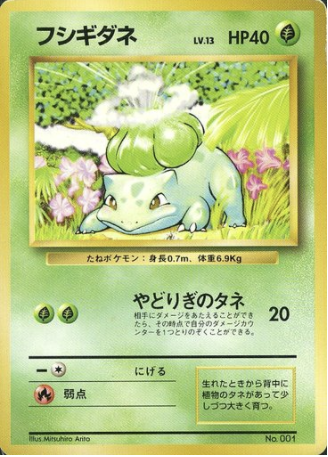
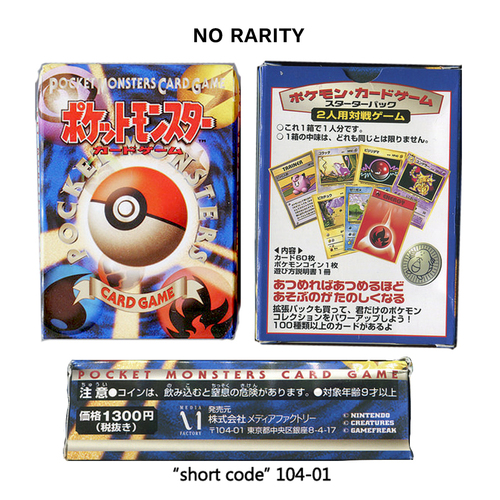
Expansion Pack & Starter Pack No Rarity Pokémon TCG
The Expansion Pack & Starter Pack No Rarity represents a significant piece of history for the Pokémon Trading Card Game. Released in Japan in 1996, this specific printing is widely recognized as the very first edition of the original Japanese Base Set. Unlike subsequent prints, these cards lack the standard rarity symbols (circle, diamond, or star) in the bottom-right corner, making them exceptionally rare and highly prized by collectors and investors worldwide. This set laid the foundation for the global phenomenon, featuring the original 102 cards that introduced fans to iconic characters in their earliest cardboard forms.
Types of products in the No Rarity collection
Collectors looking to complete their vintage sets or find specific gems can browse various product categories on our marketplace. The most common way to acquire these historical items is through Pokémon Singles. This category features individual cards ranging from common basics to the legendary holo rares that defined the early days of the game. For those interested in the original packaging or fixed lists, searching for Pokémon Preconstructed Decks provides a glimpse into how the game was initially played. While full Pokémon Booster Boxes or individual Pokémon Boosters of the No Rarity print are incredibly difficult to find due to their age, they remain the ultimate goal for high-end enthusiasts seeking sealed vintage content.
Guide to identifying and choosing No Rarity cards
When navigating this specialized market, it is essential to understand the unique characteristics of these cards to ensure you are acquiring a genuine first-print item.
Identifying the lack of rarity symbols
The primary indicator of this specific expansion print is the absence of any symbol in the bottom-right corner of the card. In standard Japanese sets, this area contains a symbol denoting the card’s rarity. On No Rarity cards, this space is left blank. This applies to every card in the set, including the famous holographic versions of Charizard, Blastoise, and Venusaur. Collectors should also look for specific text alignment and font details that distinguish these from later reprints.
Card condition and grading
Given the age of these products, condition is the most critical factor in determining value. Many collectors prefer cards that have been professionally graded to verify their authenticity and state of preservation. On CardTrader, you can find listings with detailed photos and descriptions from sellers across the globe, allowing you to choose the condition that best fits your collection goals, whether you are looking for played cards for a binder or mint specimens for an investment portfolio.
Frequently asked questions
What is the difference between No Rarity and the standard Base Set?
No Rarity cards are the first print run of the 1996 Japanese set, while the standard version includes rarity symbols and was printed later with minor graphical adjustments.
Why are No Rarity Pokémon cards so expensive?
Their high value is driven by their extreme scarcity and their status as the very first Pokémon cards ever commercially released, making them a cornerstone of the hobby.
Can I buy No Rarity cards using CardTrader Zero?
Yes, many listings for these cards are available through our CardTrader Zero service, which allows you to combine multiple purchases from different sellers into a single international shipment to save on costs.