-
Yu-Gi-Oh!
Last Expansions Beyond the Brave Magnificent Monsters Chaos Origins Battles of Legend: Glorious Gallery Blazing Dominion Legendary Modern Decks 2026 Rarity Collection 5 Maze of Muertos Burst Protocol THE CHRONICLES DECK: Spirit Charmers (All-Foil Edition) View all expansions...Categories Singles Oversized Booster Boxes Boosters Bundles Preconstructed Decks Starter Decks Tins Special & Deluxe Editions Dice View all categories...Chaos Origins Booster Box
starting from $84.43 View all offers -
Magic: the Gathering
Last Expansions Zhalfir Kamigawa: Titanbreach Star Trek Reality Fracture The Hobbit Marvel Super Heroes Secrets of Strixhaven Teenage Mutant Ninja Turtles Nauctis: The Sunken Realm Lorwyn Eclipsed View all expansions...Categories Singles Tokens/Emblems Oversized Booster Boxes Boosters Bundles and Fat Packs Tournament Prerelease Packs Tins Complete Sets Preconstructed Decks View all categories...Star Trek Collector Booster Box
starting from $580.76 View all offers -
Flesh and Blood
Last Expansions Usurp the Shadow Throne Mastery Pack: Warrior Omens of the Third Age Compendium of Rathe Super Slam Smash Palace High Seas The Hunted Rosetta Part the Mistveil View all expansions...Categories Singles Booster Boxes Boosters Preconstructed Decks Art Card Token Complete Sets Decks Displays Dice Playmats Box Set View all categories...Omens of the Third Age Box Case
starting from $398.53 View all offers -
Digimon
Last Expansions EX-13: Chivalrous XIII BT-26: Timeless Bonds EX-12: Digital World Shambala BT-25: Dual Revolution EX-11: Extra Booster Dawn of Liberator BT-24: Time Stranger BT-23: Hackers' Slumber EX-10: Extra Booster Sinister Order BT-22: Cyber Eden EX-9: Versus Monsters View all expansions...Categories Singles Memory Gauge/Tokens Booster Boxes Boosters Bundles and Pack Sets Starter Decks Playmats Albums Sleeves Deck Boxes View all categories...EX-12: Digital World Shambala Booster
starting from $115.52 View all offers -
One Piece
Last Expansions EB-05: Heroines Edition Vol.2 OP-17: The World's Strongest Warriors OP-16: The Time of Battle OP-15: Adventure on Kami's Island EB-03: Heroines Edition EB-04: Egghead Crisis OP-14: The Azure Sea's Seven OP-13: Carrying on his Will PRB-02: The Best 2 - Premium Booster OP-12: Legacy of the Master View all expansions...Categories Singles DON!! Booster Boxes Boosters Playmats Bundles & Sets Tins Starter Decks Memorabilia and Gadgets Albums View all categories...Heroine Edition Vol.2 Booster Box Case
starting from $3,346.79 View all offers -
Dragon Ball Super
Last Expansions Fusion World: Story Booster 01 Impact Beyond Dimensions Fusion World: Cross Force Three Glorious Fighters Fusion World: Dual Evolution Fearsome Rivals Fusion World: Saiyan's Pride Fusion World: Manga Booster 02 Fusion World: Wish For Shenron Prismatic Clash View all expansions...Categories Singles Storage Boosters Sleeves Dice Albums Complete Sets Booster Boxes Starter Decks Deck Boxes View all categories...Impact Beyond Dimensions
starting from $162.56 View all offers



Misprints - Yu-Gi-Oh!
Product search
Applied filters1
Expansion
rarity
Yu-Gi-Oh! Misprints and error cards
Yu-Gi-Oh! Misprints represent some of the most sought-after items for dedicated collectors. These are cards that, due to factory errors during the printing process, deviate from their intended appearance. Unlike damaged cards, misprints are born with their defects, making them unique artifacts of TCG history. On CardTrader, you can find a curated selection of these rarities, ranging from subtle ink variations to dramatic structural errors that occur during the manufacturing stages.
Understanding Yu-Gi-Oh! Misprints
Collectors categorize these anomalies based on the production stage where the error occurred. Whether it is a foil shift, a naming error, or a complete miscut, each card tells a story of the industrial process. These items are often found within Yu-Gi-Oh! Singles but can occasionally be discovered when opening older Boosters. Because these cards are technically mistakes, their population is extremely limited, often making them significantly rarer than the standard versions of the same card.
Common types of error cards available
The marketplace features several iconic error types. Reverse foils are a popular choice, where the holographic pattern is applied incorrectly or mirrored. Name shifts occur when the card title is printed in the wrong position or even features the name of a completely different card. Some of the most spectacular examples include Ghost Rare errors, such as the Elemental HERO Chaos Neos featuring the Rainbow Dragon artwork. Other common errors include ink bleeds, missing stamps, or cards with the wrong attribute symbol. Collectors often browse through various Expansions to find specific errors tied to certain print runs or language versions.
Guide to choosing and valuing misprints
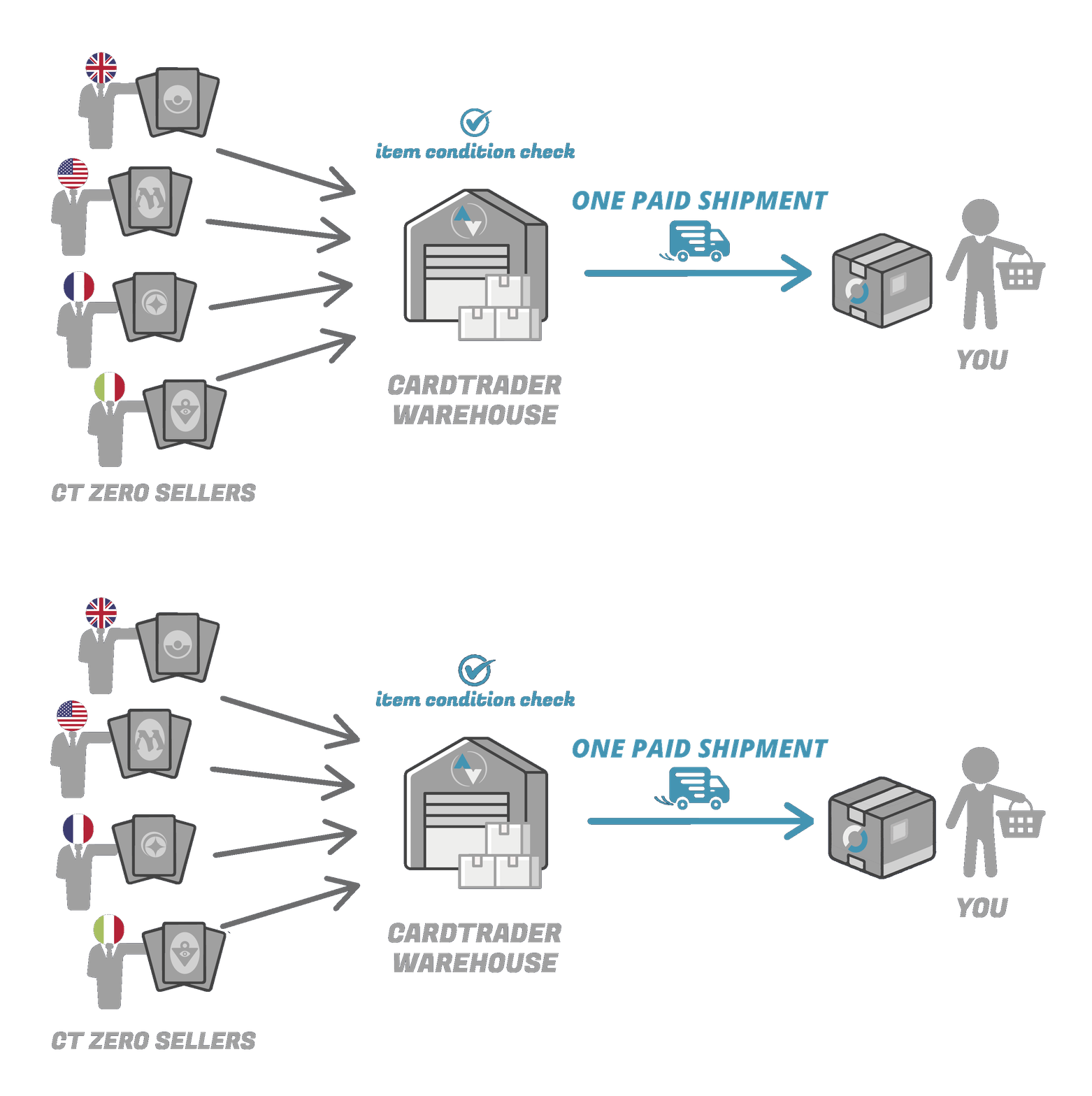
Selecting the right misprint depends on your collection goals. For those looking for visual impact, miscuts and dramatic color errors are ideal. If you prefer subtlety, look for minor text errors or subtle foil shifts. When evaluating a misprint, rarity and the popularity of the base card are key factors. A misprint on a classic card from Legend of Blue Eyes White Dragon will typically command a higher price than one from a newer set. Always check the card condition using the Card Condition Guide to ensure the premium price matches the physical state of the card. Using services like CardTrader Zero allows you to accumulate these rare finds from different sellers worldwide while paying for only a single shipment.
Frequently asked questions
Are Yu-Gi-Oh! Misprints tournament legal?
Yes, most misprints are legal as long as they are official Konami products and the card is recognizable and not distinguishable from other cards when sleeved. However, extreme miscuts that reveal parts of other cards or change the card dimensions may be disallowed by tournament officials.
How can I identify a genuine misprint?
Authentic misprints maintain the standard card stock, texture, and font of official releases, whereas counterfeits often feel different or have blurry text. Comparing the holographic stamp and the feel of the card surface against a known genuine card from the same set is the most effective identification method.
Do misprints increase a card’s value?
Yes, misprints generally carry a significant premium over standard versions because of their scarcity and the high demand among specialized collectors. The value is largely determined by the severity of the error and the popularity of the card character or archetype.
1